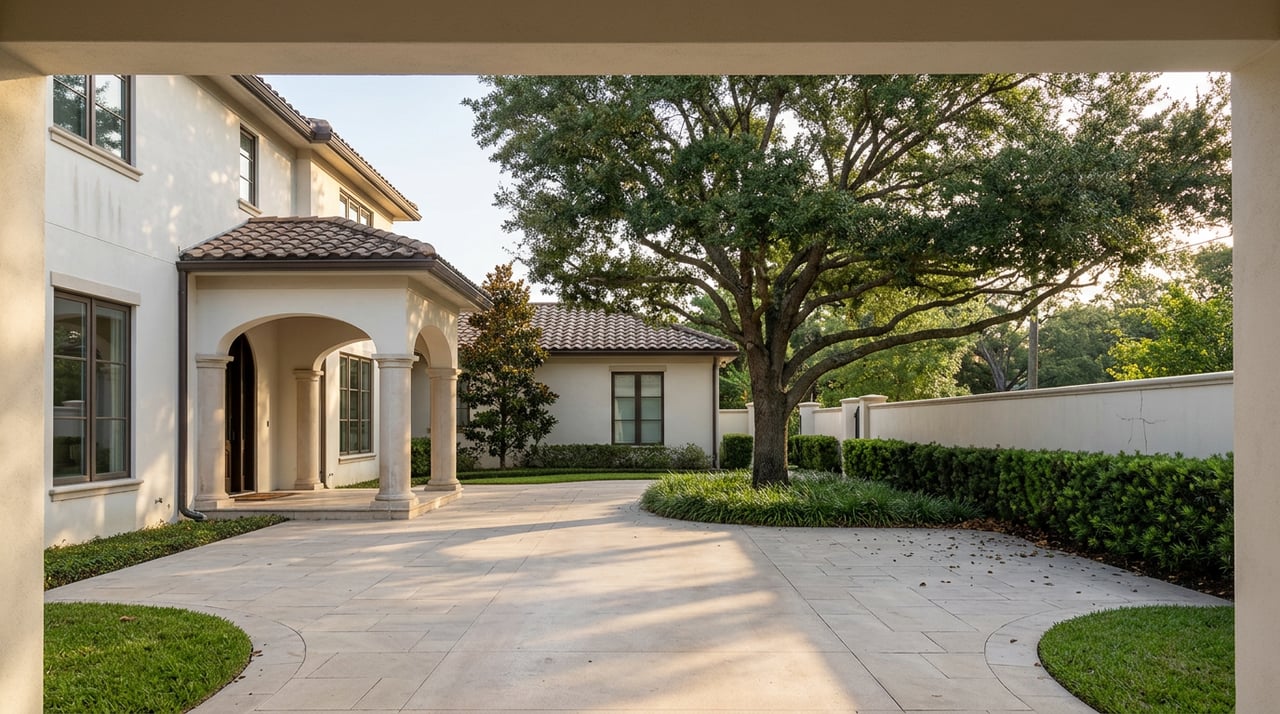
Buyers touring Avila for the first time tend to make the same assumption. The eight-foot perimeter wall, the guard at the gate, the fairways running behind acre-plus lots, all of it reads as a single package. Buy the house, get the club. That assumption is wrong, and the distinction matters to anyone considering a home in Avila.
Over the trailing twelve months, the median sale price for homes in Avila climbed to $2,425,000, up 20 percent from the prior year, according to sales data from a national listing platform. That kind of appreciation usually comes paired with speed. Instead, homes in Avila spent a median of 100 days on the market during that same window, nearly double the 56-day national average the same source reports. Zoom out to Tampa proper and the gap gets stranger still. Citywide, the average home value actually slipped 4.2 percent over the past year as of July 2026, per Zillow's tracking. Avila moved in the opposite direction, and moved slower while doing it.
That contrast is worth keeping in view as we look at what homeownership in Avila does—and does not—include.
The House Is One Transaction. The Club Is Another.
Avila Golf & Country Club, at 943 Guisando de Avila, is not owned by its members and never has been. Under the club's own by-laws, ownership of the golf course, clubhouse, and every other facility rests entirely with SICO, Inc., a corporation controlled by original developer J. Robert Sierra and his family. Members pay dues and fees, but they hold no equity or ownership stake in the physical club itself. Development of the surrounding neighborhood began under Sierra in the late 1970s, and club membership remains a separate process from homeownership decades later.
That matters because membership is not conveyed with a deed. According to the club's own membership page, joining requires an invitation and sponsorship by two current members. There is no public waitlist to sign, no application portal to fill out. A buyer can close on a $3 million estate on a golf-course lot and still have no guaranteed path into the clubhouse, the tennis courts, or the fairways their back windows face.
Here is what actually separates from the real estate transaction:
- Club initiation and dues. Roughly $65,000 to join plus around $6,500 annually, positioned above Tampa's average private club initiation fee of about $59,000.
- HOA assessments. Separate from club costs entirely, varying by phase of the neighborhood and funding the gatehouse staffing, private road upkeep, and the old-growth landscaping along the perimeter wall.
- Property tax exposure. Hillsborough County's millage rate of roughly 1.83 percent is a factor in the annual bill.
- Sponsorship, not sign-up. Two existing members must vouch for an applicant before the club will even consider them.
None of these four line items depend on each other. A household can pay every dollar of the first three and still be waiting on the fourth.
Club Membership and the Buying Process
Picture the buyer pool for a $2.7 million Avila listing, the current median list price among active inventory as of a June 2026 snapshot from a regional new-home data provider. A buyer should also account for HOA and property-tax costs before club spending, and, if seeking club access, the sponsorship process described above.
Some buyers skip the club entirely and simply want the wall, the gate, and the privacy. Buyers considering club access may want to understand the sponsorship process before making an offer. That process may involve conversations with the membership office or current members, and sometimes a wait to see whether a category has room.
The reported figures show rising sale prices alongside a 100-day median time on market. They do not establish why homes take that long to sell. Buyers considering club access can separately weigh the sponsorship process and costs described above.
What This Means If Avila Is on Your Shortlist
If you are comparing Avila against Tampa's other golf-anchored gated communities, the comparison should not stop at price per square foot. Ask, in writing, whether the sellers are members and what role, if any, their membership could play in the sponsorship process, and what the HOA's current assessment schedule looks like separate from anything club-related. None of that shows up on a listing sheet. It shows up in the resale disclosures, the HOA estoppel letter, and a phone call to the membership office.
It is also worth confirming the school assignment and any special assessments directly with the county before writing an offer, since zone lines and district budgets shift independently of the neighborhood's reputation.
Frequently Asked Questions
Does buying a home in Avila automatically include a country club membership? No. The club is owned separately by SICO, Inc. and membership requires an invitation with sponsorship from two current members, regardless of whether you own property inside the gates.
Are HOA dues and club dues the same charge? No. HOA dues are separate, vary by phase, and fund the gatehouse, private roads, and common landscaping. Club initiation and annual dues are billed separately by the club itself.
Can I live in Avila without ever joining the club? Yes. Some residents choose the neighborhood purely for the security and privacy of the gated, walled setting and never pursue club membership at all.
What does Avila's 100-day median market time mean for buyers? The reported market-time figure is one data point. Buyers considering a home can separately assess the financial costs and club-membership process described above; the figures here do not establish what caused the 100-day median.
If Avila, or another Tampa gated enclave, is somewhere you are seriously weighing against a move-up purchase or a downsizing sale, the membership and HOA questions above are worth answering before you write an offer, not after. Laura Baker has spent decades inside Tampa Bay's luxury gated communities and can walk through the specific carrying costs, membership status, and resale history tied to any address you're considering. Request a complimentary home strategy and valuation conversation before you commit to a neighborhood where club membership is separate from homeownership.
This article is general information, not legal, tax or financial advice. Consult a qualified professional about your situation.